Touched by the Lens: How Handcrafted Illusions Are Winning Back the Hearts of a New Cinephile Generation
There is a moment in the process of watching a great film when the intellect surrenders entirely to sensation. The viewer stops analyzing and simply feels. For decades, the dominant assumption inside Hollywood was that digital technology held an exclusive claim on that surrender—that limitless virtual environments and photorealistic computer imagery were the surest path to awe. Increasingly, however, filmmakers and the audiences who follow them are arriving at a different conclusion. The most electric moments in contemporary cinema are often produced not inside a server cluster but on a physical stage, with materials that can be touched, burned, bent, or broken.
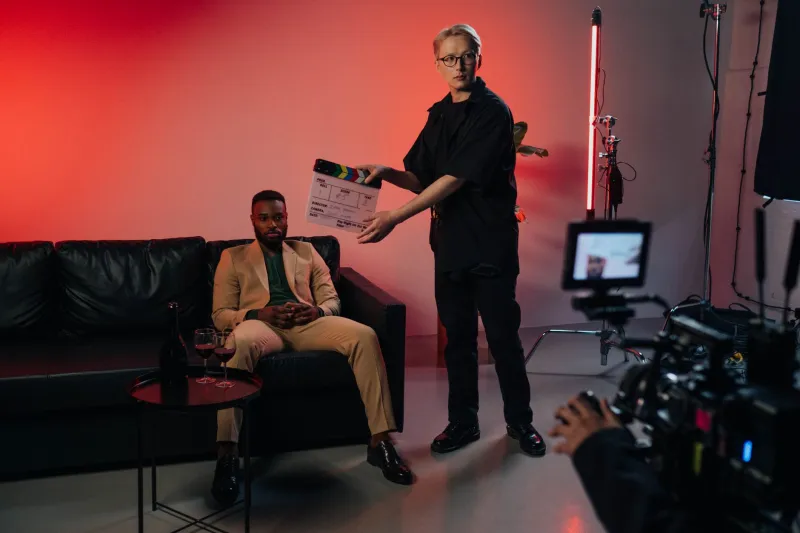
The resurgence of practical effects—in-camera illusions, miniature photography, forced perspective, animatronics, pyrotechnics, and handcrafted prosthetics—represents one of the more surprising aesthetic reversals in recent American film culture. What was once dismissed as an artifact of a pre-digital era has re-emerged as a deliberate creative statement, a countermovement with philosophical weight and genuine commercial momentum.
The Weight of the Real
Kira Delacroix, a practical effects supervisor whose credits span three studio productions and a string of critically acclaimed independent features, describes the phenomenon in terms of texture. "Digital imagery is extraordinarily sophisticated now," she says. "But it still tends to sit on top of the frame rather than inside it. When you build something real—a creature, a collapsing set piece, a flame that actually burns—the camera picks up information that no rendering engine has yet fully learned to simulate. Light behaves differently. Surfaces carry history."
That distinction, subtle to describe but unmistakable on screen, is precisely what a growing cohort of emerging directors is chasing. Marcus Ellery, whose debut feature was shot almost entirely on location with practical builds and in-camera compositing, speaks of his first encounter with the technique as something close to a revelation. "I'd grown up on digital blockbusters and admired them technically," he says. "But when I watched older films and saw what crews had achieved with physical craft, I felt something different. There was a weight to it. A risk. You could feel that the thing on screen actually existed in space and time."
That sense of existential weight—the knowledge that something was genuinely present before the camera—appears to transmit directly to audiences, often without their conscious awareness. Researchers who study viewer response have noted that test audiences frequently rate scenes built with practical elements as more emotionally intense, even when they cannot articulate why. The body, it seems, recognizes authenticity before the mind does.
Budget, Schedule, and the Myth of the Cheaper Digital Option
For years, the industry operated on the assumption that digital visual effects, whatever their aesthetic limitations, were the economically rational choice. Building a physical set costs money. Constructing a full-scale creature costs money. Controlled pyrotechnics require permits, safety personnel, and rehearsal time. A digital equivalent, the logic went, could be adjusted indefinitely in post-production without any of those logistical burdens.
That calculus is being revised. Experienced production designers and line producers point out that the endless revisability of digital work carries its own costs—costs that are frequently underestimated during pre-production. "When you build something practical, you make decisions," says production designer Alma Ferreira. "You commit. That discipline actually saves time and money downstream, because you are not generating hundreds of iterations in post trying to find a look that should have been determined before the camera rolled."
Several independent productions have begun structuring their budgets around practical-first philosophies precisely because of this discipline. By investing in physical builds early and limiting the scope of digital cleanup to genuinely necessary corrections, these productions have found that their post-production timelines compress significantly. The practical approach, far from being an indulgence, can function as a form of production efficiency.
The Apprenticeship Revival
Perhaps the most striking dimension of this resurgence is its generational character. The effects artists currently leading the movement are not veterans defending a legacy craft from extinction. Many are in their twenties and early thirties, filmmakers and technicians who came of age entirely in the digital era and chose practical work as an affirmative aesthetic decision rather than a nostalgic one.
Effects artist Devon Huang, who has built a substantial following through online documentation of his workshop process, describes his entry into the field as driven by a specific dissatisfaction. "I could have gone into VFX," he says. "I have the technical aptitude for it. But I kept watching films and feeling like something was missing—not in the imagery itself but in the relationship between the imagery and the physical world. I wanted to make things that existed."
Huang's workshop has become an informal training ground for other young artists, and he is not alone in that role. Across the country, small practical effects studios have begun offering apprenticeship programs that are oversubscribed. Film schools, responding to student demand, have reintroduced courses in miniature construction, mold-making, and in-camera optical techniques that were quietly phased out during the 1990s and 2000s.
Audiences as Collaborators in Craft
The audience dimension of this shift deserves particular attention. Contemporary viewers, especially those who have grown up consuming behind-the-scenes content through streaming platforms and social media, arrive at films with an unusually sophisticated awareness of production process. They know what digital compositing looks like. They have watched countless breakdowns of visual effects work and understand, at least conceptually, how synthetic imagery is produced.
This literacy has created a new form of engagement with practical work. When an audience member recognizes that a transformation or a destruction or a creature was physically realized—that a crew of human beings solved a genuinely difficult problem with ingenuity and craft—the appreciation is qualitatively different from admiration for a digital achievement. There is a social dimension to it, a sense of witnessing human skill rather than computational power.
Director Sasha Moreau, whose recent short film earned significant attention on the festival circuit for its use of large-scale miniature photography, describes audience responses at post-screening discussions as unusually animated. "People want to know how," she says. "Not just what they saw, but how it was accomplished. That curiosity is itself a form of engagement. The film lives beyond the screening in a way that I think pure digital work often doesn't."
The Illusion That Believes in Itself
There is something philosophically resonant in the practical effects revival that extends beyond technical preference or budgetary calculation. Cinema has always been in the business of conjuring belief—of persuading audiences to accept the impossible as immediate and true. The most enduring forms of that conjuring, this movement suggests, are the ones grounded in physical reality, however ingeniously manipulated.
The filmmakers driving this resurgence are not rejecting the full spectrum of tools available to them. They use digital technology where it genuinely serves the story. But they are insisting that the foundation of cinematic magic is material, sensory, and irreducibly human. In doing so, they are not retreating from the future of the medium. They are, perhaps, recovering something essential about its soul.