The Invisible Architecture: How Sound Design Quietly Became Cinema's Most Powerful Storytelling Instrument
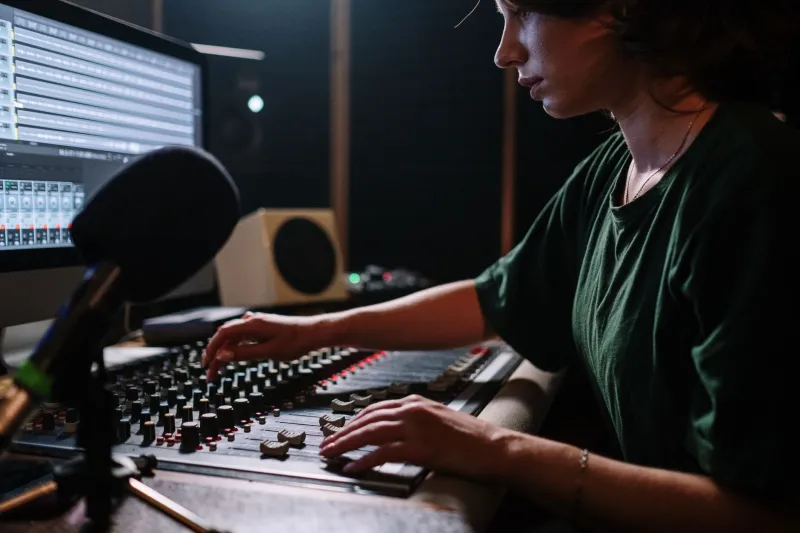
There is a famous experiment that sound designers invoke when making the case for their discipline's primacy. Take any scene from a well-crafted film, they suggest, and remove the sound entirely. Then restore the sound and remove the picture. In the overwhelming majority of cases, the audience retains more narrative comprehension, more emotional continuity, and more psychological orientation from the audio alone than from the image alone. The picture, it turns out, is often illustrating what the sound has already told us.
This is not a polemic against cinematography. It is an argument for honest accounting — an acknowledgment that the sensory hierarchy most people apply to cinema does not accurately reflect how cinema actually functions in the human nervous system.
Hearing Before Seeing: The Neuroscience of Cinematic Audio
The human auditory system processes information faster than the visual system and operates continuously, even during sleep. Sound reaches emotional processing centers in the brain through pathways that bypass conscious deliberation. When a low-frequency rumble enters a theater, the audience's adrenal systems respond before any cognitive interpretation has occurred. The filmmaker has communicated something — danger, imminence, dread — without a single frame of image contributing to the effect.
Sound designers have understood this intuitively for decades. The academic and neuroscientific literature confirming it has grown substantially in recent years, lending empirical weight to arguments that practitioners previously made on the basis of experience alone. The practical implications for filmmakers are significant: sound design is not the final layer applied to a finished picture. It is, or should be, an integral component of the storytelling architecture from the earliest stages of production.
The films that demonstrate this principle most compellingly are rarely the ones that advertise their audio ambitions loudly. They are the ones in which sound and image achieve a seamless interdependence — where the audience cannot identify the precise mechanism by which an emotion was produced because picture and audio are collaborating too fluidly to be disentangled.
Case Studies in Audio Storytelling
Consider the sound design philosophy evident in films like Arrival and Dunkirk, both of which used audio architecture to communicate information that conventional narrative tools could not efficiently convey. In Dunkirk, Christopher Nolan and sound designer Richard King constructed an auditory environment in which the Shepard tone — a sonic illusion of perpetually escalating pitch — was embedded throughout the film's score and sound effects, creating a psychological state of unrelenting tension that persisted regardless of what the image was depicting. The audience experienced the soldiers' subjective terror not through performance or dialogue but through the direct neurological manipulation of their auditory processing.
Arrival, directed by Denis Villeneuve, employed a sound palette of extraordinary restraint and precision. The alien communication sequences were designed to feel simultaneously foreign and deeply resonant — sounds that seemed to exist at the edge of comprehension, which is precisely the emotional register the narrative required. The sound design was not supporting the story; in those sequences, it was the story.
More recently, films operating at smaller scales have demonstrated that sophisticated audio storytelling is not the exclusive province of large-budget productions. Independent features working with limited resources have increasingly used sound design as a narrative equalizer — creating psychological depth and spatial complexity that would require significantly greater financial investment to achieve through visual means alone.
Spatial Audio and the Expanding Canvas
The technological dimension of this conversation has accelerated considerably. Dolby Atmos, Sony 360 Reality Audio, and DTS:X have transformed the theater sound environment from a two-dimensional horizontal field into a three-dimensional spatial experience. Sound can now be placed and moved with extraordinary precision anywhere in a three-dimensional space around the audience — above, below, behind, and at any point in between.
For sound designers, this is not merely a technical upgrade. It is a fundamental expansion of the expressive vocabulary available to them. A character's psychological state can be externalized through the spatial behavior of sound — voices that seem to close in from all directions, ambient environments that subtly shift in their three-dimensional character as a scene's emotional temperature changes, musical elements that appear to emanate from within the audience's own perceptual space rather than from speakers at the front of a room.
The implications for immersive storytelling are substantial. When sound occupies the same three-dimensional space as the audience rather than arriving from a fixed external position, the boundary between the film's world and the viewer's physical reality becomes productively unstable. This is not a gimmick. It is a new form of psychological access.
Filmmakers who have integrated spatial audio considerations into their production planning from the outset — rather than treating it as a post-production enhancement — report qualitatively different results. The sound designer's involvement in location scouting, production design discussions, and cinematographic planning produces audio work that is genuinely architectural rather than decorative.
The Advocacy Problem
Despite the discipline's demonstrable centrality to cinematic experience, sound design remains persistently underrepresented in critical discourse and industry recognition. The Academy of Motion Picture Arts and Sciences awards a single Oscar for sound — having consolidated two former categories in 2021 — while visual effects, cinematography, production design, and costume design each receive individual recognition. Film criticism, both popular and academic, devotes a fraction of its analytical attention to audio that it gives to image.
This disparity is partly a function of perception. Because skilled sound design operates below the threshold of conscious awareness — its success measured precisely by how little the audience notices it as a separate element — it resists the kind of quotable, attributable analysis that visual choices invite. Critics can describe a shot composition in language their readers will immediately understand. Describing why a particular sound frequency combination produces a specific emotional response requires a more specialized vocabulary that most critical writing has not developed.
The filmmakers and sound designers who are changing this conversation are doing so primarily through the work itself — through films in which the audio experience is so undeniably central that ignoring it becomes critical negligence. As spatial audio technologies become more widely deployed, and as audiences develop more sophisticated awareness of their own sonic experience in theaters, the critical language will follow.
The invisible architecture will not remain invisible indefinitely. And when it fully enters the light, cinema's understanding of its own expressive possibilities will be richer for the reckoning.