The Human Variable: Independent Cinema's Revolt Against the Algorithmic Casting Machine
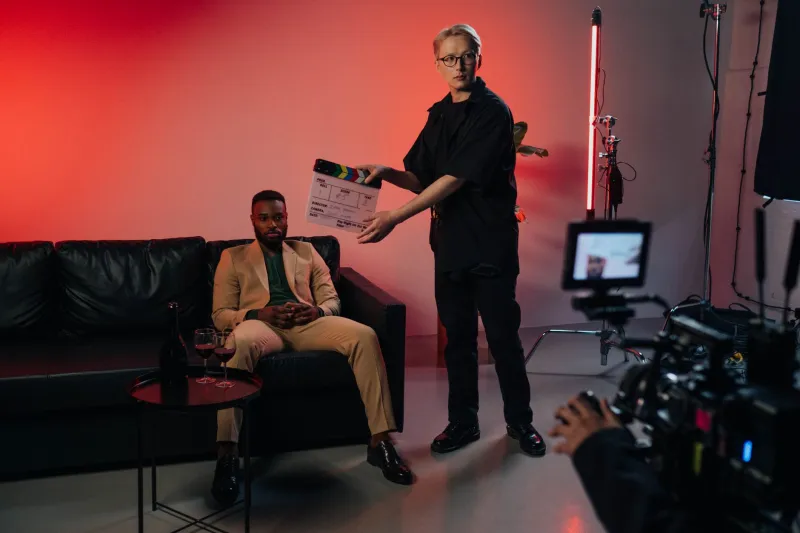
In the spring of 2019, a first-time feature director held open auditions in a church basement in Albuquerque, New Mexico. She had no casting director, no talent agency relationships, and no database of audience engagement metrics. What she had was a folding table, a camcorder, and an instinct that the story she wanted to tell required faces that had not yet been processed by the entertainment industry's machinery. The film she made with those faces went on to win a jury prize at Sundance and launched three careers that no predictive model would have flagged.
That story, repeated in various forms across the American independent film landscape over the past several years, has begun to acquire the character of a movement. As major studios and streaming platforms deepen their investment in AI-assisted casting analytics, a growing cohort of filmmakers is responding with deliberate, principled rejection. Their argument is not merely aesthetic. It is a claim about what cinema is capable of — and what it loses when human intuition is replaced by demographic optimization.
The Architecture of Algorithmic Casting
To understand the backlash, it is necessary to understand what algorithmic casting actually entails. The practice varies in sophistication across the industry, but its core logic is consistent: quantify the audience appeal of individual performers using data drawn from box office history, social media following, streaming engagement statistics, and sentiment analysis of fan communities. That data is then used to model the projected commercial performance of different cast configurations before a single frame is shot.
Several analytics firms now offer these services to studios and production companies, and their client lists are not limited to the major tentpole operations. As the tools have become more accessible and less expensive, they have migrated into mid-budget productions and even some corners of the independent sector. The appeal is understandable. Greenlight decisions involve enormous financial risk, and any tool that appears to reduce uncertainty carries genuine institutional value.
The problem, as critics within the industry are increasingly articulating, is that the data these models rely upon is inherently retrospective. It measures what audiences have responded to in the past, which means it systematically discounts the possibility of the new. An actor who has not yet appeared in a major release has no engagement metrics. A performer whose work has been confined to regional theater or short-form digital content registers as a statistical nonentity. The algorithm, by design, cannot see what it has not yet been shown.
Discovery as a Creative Act
The history of American cinema is, in no small part, a history of discovery — of performers found in unexpected places whose presence transformed the films they inhabited and, occasionally, the industry itself. Dustin Hoffman had appeared in one minor film before The Graduate. Sissy Spacek was a relative unknown when Brian De Palma cast her in Carrie. More recently, the careers of actors like Teyonah Parris and Brian Tyree Henry were built through a series of independent projects that preceded any meaningful data footprint.
These discoveries were made by human beings exercising judgment that was irreducibly personal — a response to presence, to timing, to something in a performer's eyes during a cold read that defied precise description but communicated itself unmistakably. That capacity for response is what the algorithmic model cannot replicate, because it operates on the output of past human responses rather than the act of responding itself.
Independent filmmakers who have consciously rejected data-driven casting describe their audition processes in terms that emphasize exactly this quality of direct encounter. Several have returned to open calls and community outreach, deliberately seeking performers outside the standard agency pipelines. Others have partnered with acting conservatories and community theater organizations in cities that Hollywood typically ignores — Detroit, Louisville, El Paso — finding talent that carries regional specificity and lived authenticity that trained industry performers sometimes struggle to access.
The Commercial Counter-Argument
The studios' investment in analytics is not without rational foundation, and the independent filmmakers pushing back against it are not naive about the commercial realities of the business. Films are expensive to make and distribute, and the failure rate is high. If a data model can meaningfully improve the odds of a project reaching its intended audience, the case for using it is not trivial.
The counter-argument, borne out by a notable series of recent independent successes, is that algorithmic casting may optimize for a particular kind of commercial performance while actively undermining the conditions that produce exceptional cinema. The films that generate the deepest cultural resonance — the ones that become reference points for a generation of viewers — tend to be distinguished by something that feels discovered rather than selected. An audience can sense, at some level not fully available to conscious analysis, when a performer's presence in a film has been justified by something other than their marketability.
The breakout success of films built around non-traditional or previously unknown casts has repeatedly demonstrated that audiences will invest in unfamiliar faces when those faces are serving a story with genuine conviction. The algorithm's fundamental error may be its assumption that familiarity and appeal are the same variable.
Restoring the Audition
Among the most striking aspects of the independent casting revolt is its rehabilitation of the audition as a meaningful creative event. In the major studio system, the audition has been progressively formalized and datafied — performances submitted via self-tape, evaluated against demographic profiles, filtered through layers of institutional review before a human director ever encounters them. The spontaneity that once characterized the process has been largely engineered away.
Several independent directors have described returning to extended, in-person audition processes as one of the most creatively generative decisions they have made. The room, they report, produces information that no self-tape can transmit — chemistry between performers reading together for the first time, unexpected interpretive choices that reframe a scene, the quality of listening that distinguishes a performer who understands a character from one who has merely learned the lines.
This is, at its core, a technological argument as much as a humanistic one. The tools available to casting directors have multiplied enormously in the streaming era, but more tools have not produced better outcomes. The most sophisticated instrument in the casting process remains the human being sitting across the table from a performer, bringing to that encounter a lifetime of responses to stories and to people — a dataset of one, irreplaceable and irreducible.
The filmmakers who are making this argument through their work are not rejecting technology categorically. They are insisting that technology serve the story rather than determine it. In that insistence, they are defending something essential about what cinema, at its best, has always been: not a product assembled from validated components, but a human act of imagination that discovers, in the most unlikely places, exactly the face the story needed.