The Cut That Changes Everything: How Editors Became Cinema's Most Powerful Hidden Architects
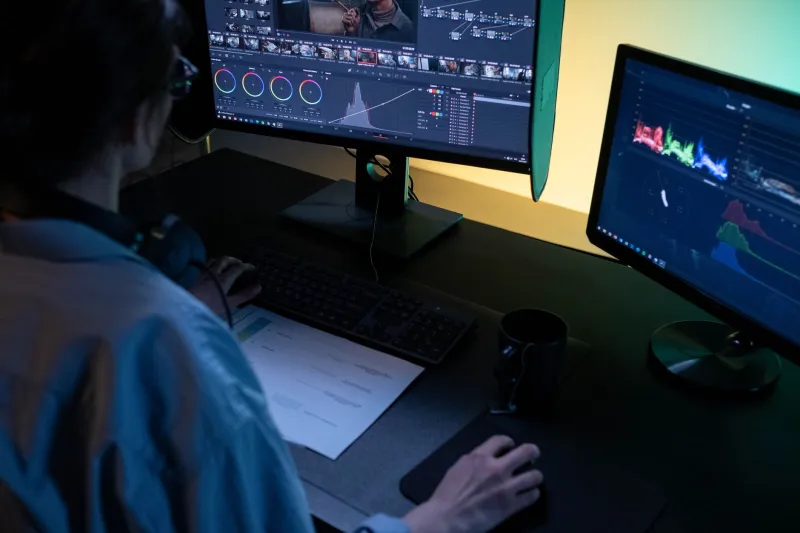
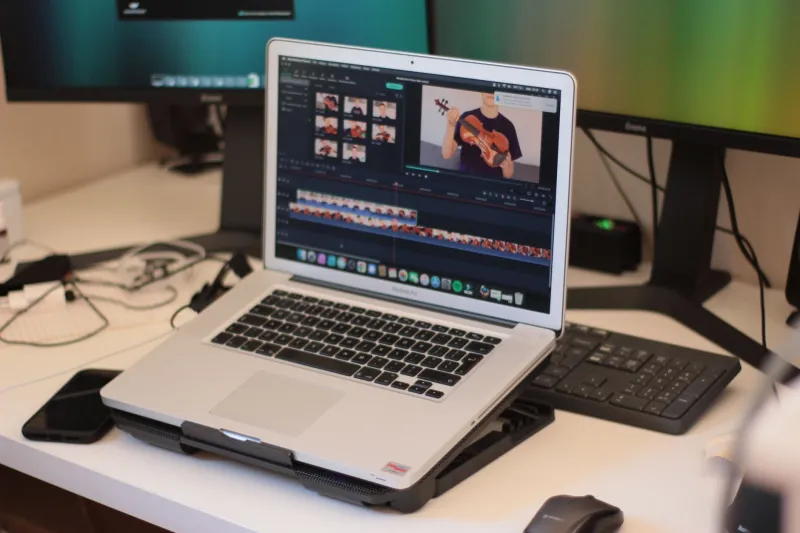
The editing room has a particular reputation in Hollywood mythology: a dark, quiet space where a skilled technician arranges the footage a director has already shaped into its essential form. The editor, in this telling, is a craftsperson of considerable precision but limited creative authority — a translator, not an author. It is a characterization that working editors find both familiar and deeply inaccurate. The reality of contemporary post-production is considerably more complex, more contested, and more creatively consequential than the mythology suggests.
A Room Where Stories Are Rebuilt
The distance between what a film is when principal photography wraps and what it becomes when it reaches a theater audience is frequently vast. This is not a new phenomenon — the history of American cinema is populated with productions whose final form bears only partial resemblance to their original conception — but the scale and sophistication of the transformation that occurs in post-production has grown considerably in the modern era.
Editors today are not simply selecting the best take from among the available options. They are making structural decisions of enormous consequence: determining the order in which information reaches the audience, controlling the emotional register of individual scenes through the rhythm and duration of cuts, and occasionally identifying narrative possibilities in the footage that neither the director nor the screenwriter had anticipated during production. When those possibilities are significant enough, the editor's contribution crosses from craft into co-authorship.
The tension this creates is real and rarely discussed openly. Directors arrive in the editing room with a proprietary relationship to the material they have spent months — sometimes years — preparing and shooting. Editors arrive with fresh eyes, no emotional attachment to any particular shot or sequence, and a professional obligation to serve the film rather than the production experience that generated it. These are not always compatible orientations.
The Footage Tells a Different Story
Among the most consistently reported phenomena in post-production is the discovery that footage, assembled without the context of the shooting environment, communicates differently than anyone expected. A performance that read as powerful on set may register as overwrought on screen. A scene that seemed essential to the story's logic may reveal itself, in the edit, as redundant. Conversely, a moment that was treated as transitional filler during production may contain an emotional truth that the editor recognizes and elevates into something central.
This is where the editor's role most clearly transcends technical function. The ability to read footage — to understand what it is actually doing as opposed to what it was intended to do — requires a form of narrative intelligence that is distinct from direction, distinct from performance, and distinct from cinematography. It is a skill developed through sustained, intimate engagement with the relationship between images and time.
Some of the most celebrated transformations in American film history have occurred precisely at this intersection of unexpected footage and perceptive editorial vision. Films that tested poorly in early cuts and were subsequently restructured in post-production to become defining works of their era are not exceptional cases; they are a recurring pattern. The editing suite, in these instances, functions less as a finishing room than as a development laboratory — a space where the film's actual potential is discovered rather than simply realized.
The Architecture of Emotion
Beyond narrative restructuring, the editor's influence operates at a more granular and equally powerful level: the management of emotional experience across the duration of a film. Pacing — the felt sense of a film's speed and rhythm — is almost entirely an editorial construction. Two films shot with identical scripts and performances can produce radically different emotional experiences depending on the choices made in the cutting room regarding the length of shots, the placement of pauses, and the relationship between image and sound at the moment of each cut.
This dimension of editorial craft is perhaps the least visible to audiences and the most difficult to discuss in concrete terms, yet its effects are among the most immediately felt. The sense that a film is alive — that it breathes, that it pulses with a distinctive inner energy — is inseparable from the rhythm that the editor has constructed. Directors who have worked repeatedly with the same editor frequently describe the relationship as one of the most important creative partnerships in their careers, precisely because the editor's rhythmic sensibility becomes inseparable from the director's visual identity over time.
The collaborations between certain directors and their long-term editors — Thelma Schoonmaker and Martin Scorsese representing perhaps the most frequently cited American example — have produced bodies of work in which the editorial voice is so thoroughly integrated into the filmmaking identity that separating the contributions becomes a largely theoretical exercise.
When the Editor Rewrites the Film
The most dramatic expression of editorial authority occurs when the editor identifies a fundamental structural problem — a character whose arc is not functioning, an act break that arrives at the wrong moment, a subplot that consumes screen time without generating proportionate emotional return — and proposes a solution that requires not simply rearranging existing footage but effectively rewriting the film through selection and juxtaposition.
This is a moment of considerable creative and professional delicacy. The director's vision, as expressed through the footage, is the raw material with which the editor works. But the editor's obligation is ultimately to the film as an audience experience, and when those two loyalties diverge, the editor must navigate the divergence with both artistic conviction and diplomatic intelligence.
Productions with sufficient resources sometimes return to set for additional photography specifically to address problems identified in the editing room — a practice that has become standard enough in studio filmmaking to be budgeted for in advance. These reshoots are frequently mischaracterized as signs of a troubled production, but many of the most successful films in recent American cinema history have undergone substantial additional photography that was editorially motivated and editorially directed, with editors identifying precisely what new material was needed to make an existing cut cohere.
Toward a New Understanding of Authorship
The broader implication of the editing suite's growing creative centrality is a necessary complication of the auteur framework that has dominated serious film discourse for decades. The idea that a film is fundamentally the expression of its director's singular vision is not wrong, but it is incomplete. The director's vision is the foundation; the editor's intelligence is the structure built upon it. And in the most productive collaborations, the two are so thoroughly intertwined that the concept of a singular authorial source becomes genuinely difficult to sustain.
For cinema enthusiasts and serious observers of the craft, the editing room deserves recognition not as the final stop on a film's journey from concept to screen, but as one of its most decisive creative environments — a laboratory where the film's ultimate identity is not merely confirmed but, with increasing frequency, discovered.
The cut, it turns out, changes everything. It always has. The industry is simply becoming more willing to say so.