The Theater Will Not Be Streamed: Why Cinema's Communal Soul Is Worth Fighting For
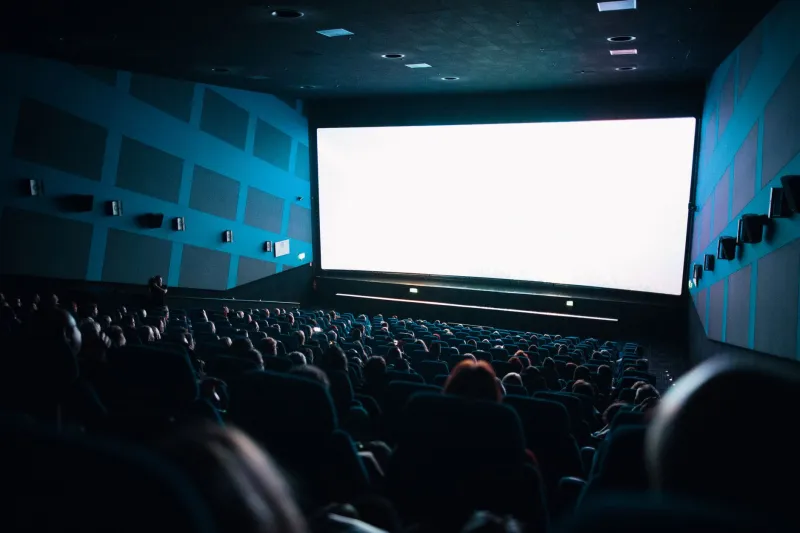
There is a moment that every devoted filmgoer knows intimately — the collective intake of breath when a plot twist lands, the ripple of laughter that travels across a darkened row of strangers, the silence after a devastating final frame that no one wants to break. It is, in the truest sense, a shared human event. And it is disappearing.
The ascent of streaming has been, by almost any commercial metric, an extraordinary success story. Netflix, Max, Apple TV+, and their rivals have delivered convenience at a scale that would have seemed fantastical two decades ago. Yet convenience, as numerous directors are now arguing publicly and with increasing urgency, has come at a profound creative cost. The film, as an art form, was designed for the theater. Its grammar — the wide shot, the slow build, the overwhelming score — was written for a room full of people surrendering their attention together. Watched alone on a laptop between notifications, something essential is lost in translation.
Designed for Darkness
To understand what is at stake, it helps to consider the architecture of cinema itself. The theatrical experience is not incidental to the storytelling; it is, for many directors, the storytelling's final ingredient. Sound designers calibrate mixes for rooms with specific acoustic signatures. Cinematographers make choices about shadow and color contrast that only resolve correctly on a projection screen of a certain size. When a film migrates to a 55-inch television in a lit living room, those decisions do not merely diminish — they are functionally overridden.
Christopher Nolan has been among the most vocal advocates for the theatrical form, famously structuring his release strategies around IMAX engagements and resisting the streaming window with a consistency that has occasionally put him at odds with studio partners. His position is not mere nostalgia; it reflects a conviction that the medium and the venue are inseparable. Other filmmakers, including Denis Villeneuve and Greta Gerwig, have echoed similar sentiments in recent years, arguing that the theatrical premiere is not a promotional event but the intended point of first contact between a film and its audience.
The pandemic years accelerated a shift that was already underway, and the industry has not fully recovered. Domestic box office numbers, while rebounding from their 2020 nadir, remain structurally different from pre-streaming patterns. Mid-budget dramas — the films that once served as the theatrical ecosystem's connective tissue — have largely retreated to streaming, where they are consumed individually and fleetingly, their cultural footprint reduced to a brief algorithmic recommendation.
The Hybrid Experiment
Some filmmakers are refusing to accept this as an inevitable endpoint. A growing number of independent directors are engineering release strategies that deliberately foreground communal viewing, using theatrical exclusivity not as a legacy courtesy but as a creative statement.
Community screening programs, often organized through partnerships with art house chains like the Alamo Drafthouse or regional cinematheques, have become a meaningful distribution channel for films whose directors want to control the conditions of first encounter. These events frequently include post-screening conversations, creating a participatory layer that streaming cannot replicate. The film becomes an occasion rather than a convenience.
Technological innovation is also entering the conversation, though with some ambiguity about its ultimate intent. Dolby Atmos home theater systems and high-end 4K projection setups have raised the ceiling of the domestic viewing experience considerably. IMAX, meanwhile, has explored licensing its brand and audio-visual standards to premium home installations — a development that has generated both excitement and skepticism. Critics of the so-called "IMAX at Home" concept argue that it appropriates the theatrical brand's prestige without delivering the communal dimension that gives that prestige meaning. An IMAX screen is not principally about resolution; it is about shared scale, shared darkness, shared time.
What Algorithms Cannot Measure
The streaming model's effect on cinema is not limited to distribution. It has reshaped development priorities in ways that subtly erode the theatrical sensibility. Platforms optimize for completion rates, rewatchability, and binge-friendly pacing — metrics that reward a different kind of storytelling than the one that makes audiences gasp in unison in a theater on a Friday night.
Filmmakers who have worked across both contexts describe a pressure, sometimes explicit and sometimes atmospheric, to structure stories for the individual viewer rather than the crowd. The slow burn, the ambiguous ending, the long take that demands sustained collective attention — these are the elements most vulnerable to the streaming paradigm's logic of perpetual choice.
Several directors working in the independent space have begun treating theatrical commitment as an artistic declaration. By insisting on a 90-day theatrical window before any streaming availability, they are not simply following a commercial strategy; they are making a statement about the kind of film they have made and the kind of attention they believe it deserves.
The Case for Inconvenience
There is something counterintuitive but important in the argument these filmmakers are advancing. They are, in effect, asking audiences to accept inconvenience — to drive to a theater, buy a ticket, silence a phone, and surrender two hours to a shared experience — as a feature rather than a bug.
The evidence suggests that audiences are, under the right circumstances, willing to do exactly that. The record-breaking theatrical runs of recent years, from Oppenheimer to Everything Everywhere All at Once, demonstrated that communal cinema retains a powerful draw when the film in question feels like an event. The challenge is sustaining that draw for films that do not arrive pre-packaged with franchise familiarity or nine-figure marketing budgets.
What those films had in common was a sense of necessity — a quality that communicated itself through word of mouth and cultural conversation, persuading audiences that this was something to be experienced together rather than deferred to a streaming queue. That quality cannot be manufactured by a release strategy alone. It emerges from the film itself, from storytelling that understands its own scale and reaches for the room.
The directors fighting for the theatrical experience are, at bottom, fighting for a particular conception of what cinema is for. Not a delivery mechanism for content, but a shared act of imagination — one that requires darkness, proximity, and the presence of strangers. That argument is older than streaming, older than television, older than the Hollywood studio system itself. And it remains, for those who have felt the theater's particular electricity, entirely persuasive.