Dust and Light: How Filmmakers Are Turning Forgotten Archives Into Living Cinema
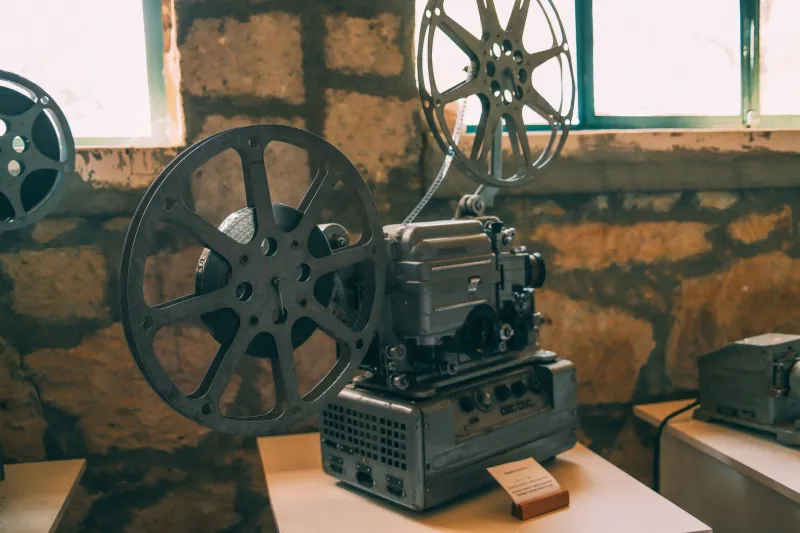
There is something almost alchemical about what happens when a filmmaker opens a rusted film canister that has sat undisturbed for half a century. The silver-halide images inside may be cracked, faded, or partially dissolved by time—yet within that decay lives a story that, in the right hands, can speak with startling clarity to a contemporary audience. Across the American film landscape, a quiet but consequential movement is underway: directors, documentarians, and narrative storytellers are mining forgotten archives not as historians, but as artists.
The results are reshaping what American cinema understands about its own past—and about itself.
The Archive as Raw Material
For much of Hollywood's history, archival footage served a decorative function. It appeared in montages to establish period, in documentary prologues to signal credibility, or in biopics as wallpaper behind dramatic reconstructions. The footage was evidence, not argument. It authenticated rather than originated.
That relationship has fundamentally changed. A new generation of filmmakers treats archival material the way a novelist treats a found letter—not as a relic to be displayed, but as a living document to be interrogated, recontextualized, and woven into something entirely new. The archive, in this emerging practice, is not a repository of the past. It is a collaborator.
Consider the method. Directors working in this mode typically spend months—sometimes years—in library basements, university collections, and private estates, cataloguing footage that institutional memory has allowed to slip into obscurity. What they find is rarely what they expect. Abandoned newsreel sequences, half-edited industrial films, home movies donated by families who no longer recognize the faces in them, government propaganda reels never publicly screened—these fragments carry within them entire worlds that official history chose not to preserve.
The filmmaker's task becomes one of excavation and translation.
Why Now? The Cultural Hunger for Authentic Texture
The timing of this archival renaissance is not coincidental. American audiences, saturated by algorithmically engineered content and the frictionless polish of digital production, have developed an appetite for texture—for images that carry the weight of actual time. There is an emotional register that a deteriorating 16mm frame communicates that no digital filter can convincingly replicate. The imperfection itself becomes information. It tells the viewer: this was real, and it was forgotten, and you are now being asked to remember it.
This hunger for authenticity intersects with a broader cultural reckoning. Questions of whose stories were preserved and whose were discarded are no longer peripheral concerns in American creative culture—they are central ones. Archival filmmaking, at its most purposeful, is an act of recovery that carries political and moral weight. When a filmmaker resurrects footage of a Black neighborhood demolished for urban renewal in the 1950s, or reconstructs the interior life of a Japanese American family through home movies shot between internment camp releases, the act of recovery is itself a form of argument about what history chose to remember and what it chose to erase.
The Craft of Recontextualization
What separates the most compelling examples of this approach from mere archival curiosity is the sophistication of the recontextualization. The footage alone is not enough. The filmmaker must construct a frame—narrative, sonic, structural—that allows old images to generate new meaning without distorting or exploiting the original subjects.
This is genuinely difficult craft. The ethical stakes are real. Archival subjects cannot consent to new interpretations of their recorded lives. Communities whose images are being excavated may have complex relationships with the periods being depicted. The filmmaker who treats archival material carelessly risks transforming an act of recovery into an act of appropriation.
The most accomplished practitioners navigate this tension through rigorous contextual research, close collaboration with communities whose histories are being represented, and a willingness to let the archive resist as well as yield. Sometimes the most powerful creative choice is to acknowledge the gaps—to let the silence where footage does not exist speak as loudly as the images that survived.
Sound design plays an equally important role. Original audio from archival sources is frequently unusable—degraded, incomplete, or absent entirely. Contemporary composers and sound designers working in this space must make choices about how to sonically frame images that originally existed in entirely different acoustic environments. The wrong score can sentimentalize material that demands complexity. The right sonic approach can transform a flickering 8mm frame into something that feels viscerally present.
Cyclical Storytelling and the American Mythic Imagination
Beyond the ethical and aesthetic dimensions, the archival filmmaking movement illuminates something fundamental about how stories function across time. Human experience moves in patterns that repeat across generations—migration, displacement, aspiration, resistance, grief, reinvention. When a filmmaker excavates footage of Americans navigating a moment of national crisis fifty or eighty years ago and places it in conversation with the present, the effect is not merely historical. It is structural. The audience recognizes the pattern because they are living inside a version of it.
This is what distinguishes archival filmmaking at its best from nostalgia. Nostalgia looks backward with longing, seeking comfort in an idealized past. Archival storytelling, by contrast, looks backward with rigor—seeking not comfort but comprehension. It asks: what were the forces at work then, and how are those same forces operating now, in different costumes?
The American mythic imagination has always been drawn to cycles of destruction and rebirth, to the idea that what is buried eventually resurfaces. The filmmakers working with archives are, in a sense, giving that mythic impulse a concrete methodology. They are not inventing the past. They are listening to it.
The Future of the Vaults
The practical conditions for this work are shifting rapidly. Digitization projects at institutions ranging from the Library of Congress to regional historical societies are making previously inaccessible materials available to researchers and artists. Artificial intelligence tools are accelerating the process of cataloguing and restoring deteriorated footage, opening archives that would have required prohibitive resources to process even a decade ago.
This democratization carries its own implications. As archival access expands, the question of who gets to interpret these materials—and through what frameworks—becomes increasingly urgent. The most generative future for this movement is one in which the filmmakers doing the excavating are as diverse as the communities whose images they are recovering.
The vaults are deeper than anyone has fully measured. What they contain is not simply the past. It is, in the hands of the right storytellers, the present—waiting to be developed.